
Did You Know? Educational Games Now Use AI to Adapt Lessons in Real Time
 M N Ansaf Hussain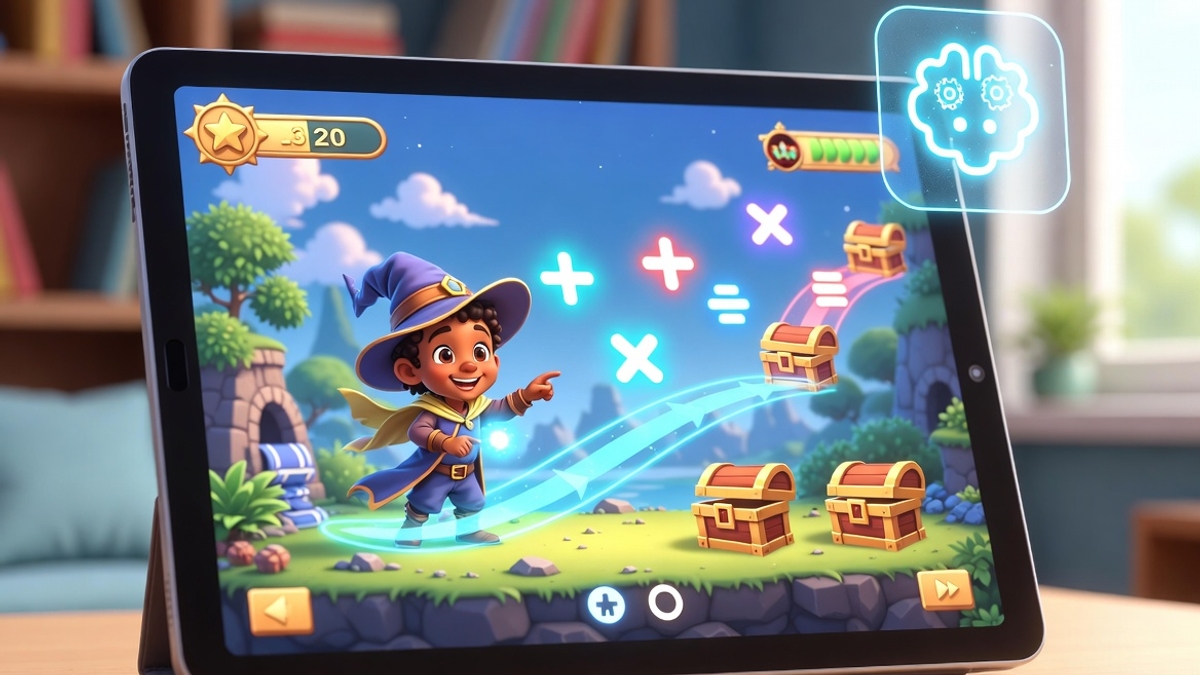
Some educational platforms use AI to watch how children answer questions or play through activities and then automatically adjust the next steps. The AI selects from a set curriculum, changes difficulty, or changes the order of content to match what the child is ready for right now. These are supplements that work alongside teachers, not full teacher-style learning plans.
Prodigy Math: Adaptive Algorithm in a Game Setting
Prodigy Math is a platform where students answer math questions while playing in an adventure world (battles and quests). Its adaptive algorithm “automatically detects students’ strengths and areas of need and keeps students in their zone of proximal development.”
If a student struggles, it drops back to prerequisite skills. If they succeed, it moves forward. It also uses a spiral review approach to reinforce earlier topics while introducing new ones. All content stays aligned to standards. Teachers can create assignments, focus mode, or test preps to target specific areas, and both teachers and parents get reports on progress and gaps.
The system does not invent new curriculum — it chooses and adjusts from existing questions and lessons. Students do not even realize they are being assessed while they play.
Direct sources:
Prodigy Math official page: https://www.prodigygame.com/main-en/prodigy-math
“Is Prodigy Math Game Adaptive? Our Algorithm, Explained”: https://www.prodigygame.com/main-en/blog/is-prodigy-math-adaptive
DreamBox: Real-Time Adjustments Within Its Curriculum
DreamBox (by Discovery Education) offers math and reading programs that combine an engaging curriculum with “Intelligent Adaptive Learning™.” The software “evaluates children’s interactions and adjusts and readjusts in real time, so every learner can progress at a pace and on an instructional path that’s right for them.”
It uses continuous formative assessment and scaffolded lessons. Teachers receive an end-to-end view of progress and can assign targeted lessons. The platform does not create entirely new learning plans; it personalizes within its own pre-built curriculum map.
Direct sources:
DreamBox official homepage: https://www.dreambox.com
Buddy.ai: Voice-Based AI Tutor with Game Elements
Buddy.ai is an app where children practice English through voice conversations with an animated character and short games. The AI uses voice recognition to understand accents and responses, then tailors the next activities. Lessons include game mechanics designed for different learning styles (visual, auditory, kinaesthetic).
Children often treat it as a game rather than formal study. It is designed as a supplement for early learners (ages 3–8), not a replacement for classroom teaching.
Direct sources:
Buddy.ai official website: https://buddy.ai
TechCrunch coverage (2024): https://techcrunch.com/2024/10/31/buddy-ai-is-using-ai-and-gaming-to-help-children-learn-english-as-a-second-language/
Important Context
These tools provide helpful personalization by adjusting difficulty and sequence inside their fixed curriculum. They are built to support teachers and parents, who still set goals, review reports, and guide overall learning. Results vary by child, and the systems rely on existing content rather than creating custom academic plans from scratch.
The information above comes only from the official websites and the verified high-profile article listed with direct URLs. No added claims or outcomes beyond what the sources actually state.
If you identify any inaccuracies or wish to request corrections or content removal, please reach out through our contact page: https://bytefide.xyz/#contact